Progression
How the bar gets heavier over months, when to add weight, and when to back off.
-
Start hereHow to do progressive overload: add reps, then weightTo progressively overload, add reps until your last set tops the range, then add weight. What the ACSM and two 2026 trials show, and how to tell it works.

-
How much stronger can you get in a year? Data from 350,000 liftersDrug-tested raw lifters typically add about 4% to their total in a year (median), 8 to 10% in the first year, less with each later meet. By lift, age and level.

-
Periodization: does it matter, and which type is best?Periodization plans training in phases. What meta-analyses show for strength and muscle, linear vs undulating vs block, mesocycle length, and what Povver does.

-
Progression models compared: linear, double, percentage, RPEWhich progression model fits which lifter? Linear, double, percentage-based and RPE loading compared: what the trials show, and how Povver progresses a lift.

-
Deload week: when to take one, and how Povver schedules itA deload is a week of reduced training stress. How often lifters take one, what the research shows, what to cut, and how Povver schedules it.

-
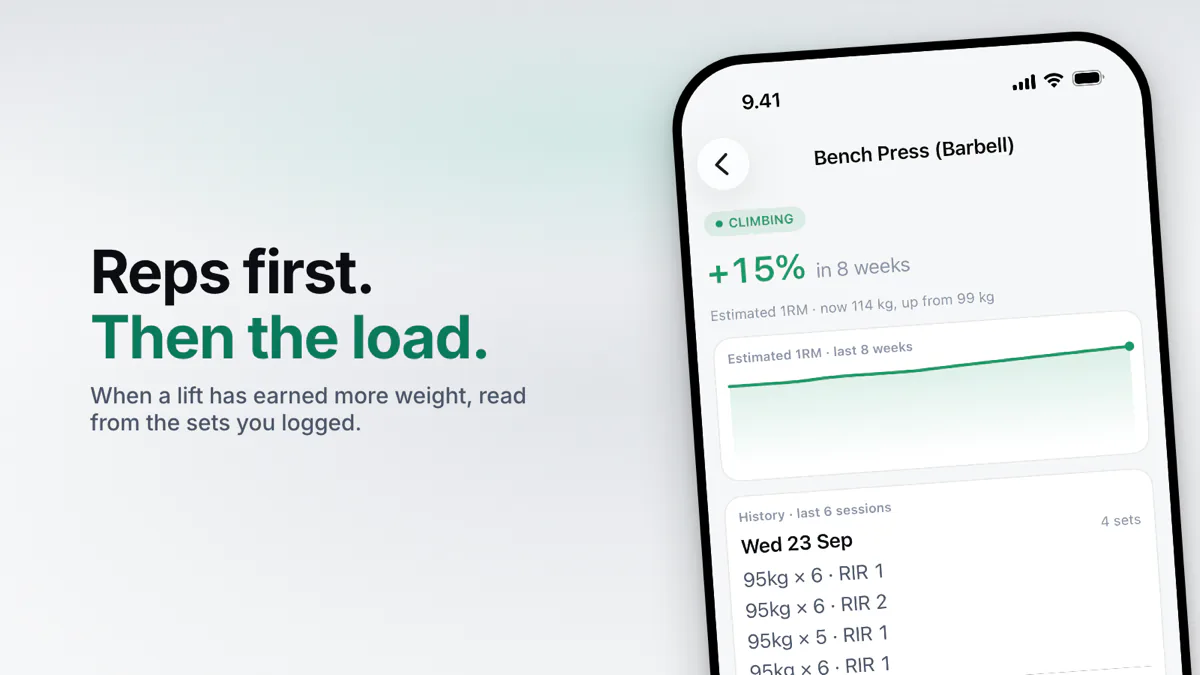
Double progression: when should the weight go up?Double progression adds reps first, then weight once the last set reaches the top of the range. How it works, how Povver sizes the jump, and when it waits.
Effort, volume and rest
How hard, how many sets, how many reps and how long to rest, and what each one buys you.
-
Start hereTraining to failure: how close do you need to go?Failure is optional for muscle and strength. Closer helps muscle size a little, and strength barely cares. What the reviews found, and how Povver handles it.

-
Drop sets, myo-reps and rest-pause: do they beat straight sets?Drop sets, myo-reps and rest-pause grow muscle about as much as straight sets in less time. What the 2026 reviews found, and how to count them in your week.

-
How long to rest between sets for muscle and strengthRest over 60 seconds for muscle; studies detect no extra growth past about 90. Trained lifters need over 2 minutes for strength. Trials and Povver's timer.

-
How many reps build muscle? The rep range that worksSets of about 8 to 35 reps build about the same muscle when taken to failure; heavier sets build more strength. The evidence and Povver's default ranges.
-
How many sets per muscle group per week? Hard sets, counted10 to 18 hard sets per muscle per week is a good range for growth. What counts as a hard set, why indirect sets count half, and what the studies show.

-
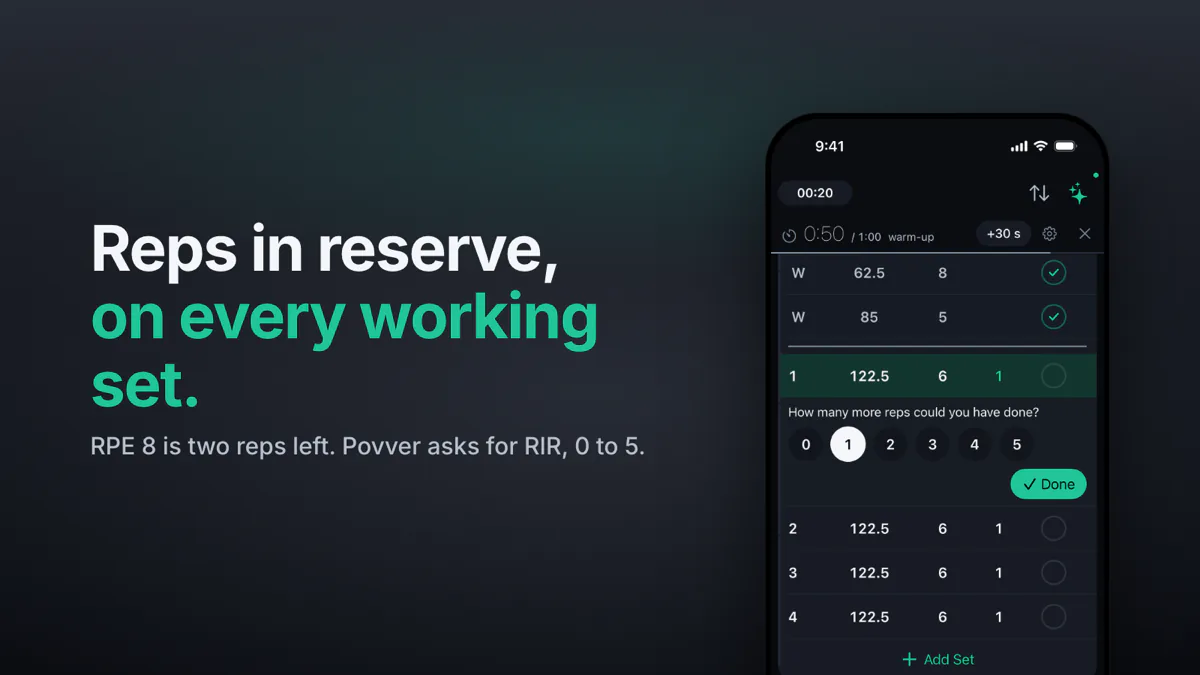
RPE vs RIR: what reps in reserve means and how to use itRIR is the reps you had left, and lifting RPE is 10 minus RIR. What it means, how well lifters judge it, and how to use it to pick a load and add weight.
Strength numbers
What your max is, how it is estimated, and how your lifts compare with other lifters.
-
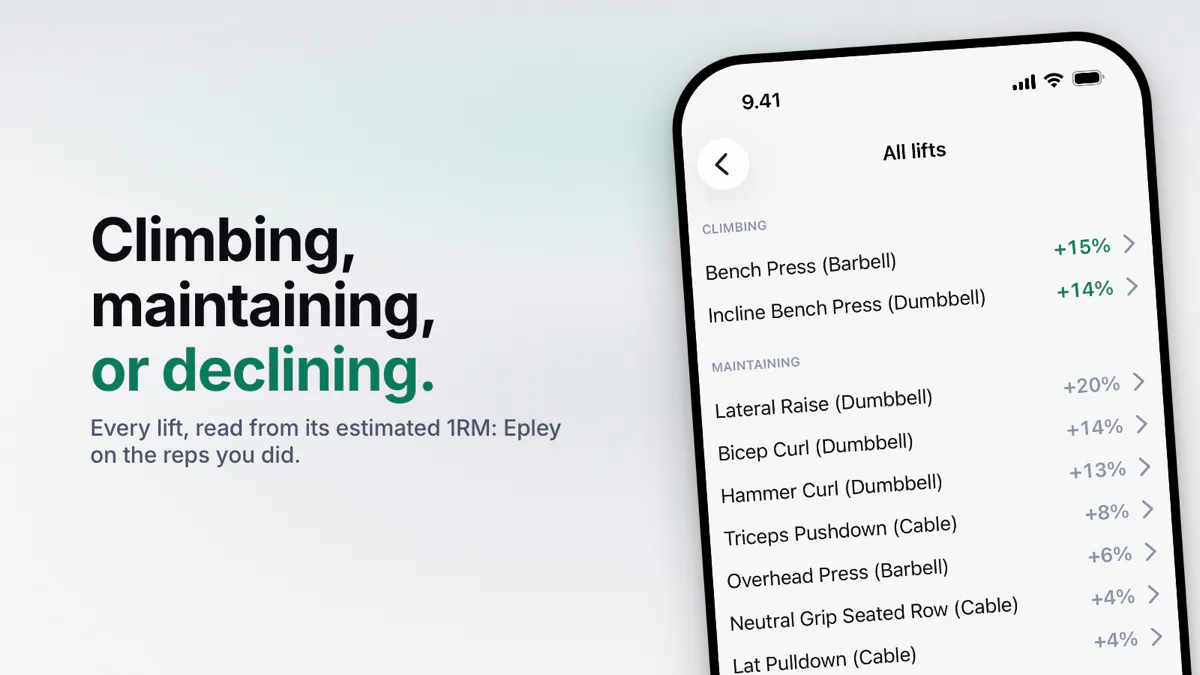
Start hereEpley vs Brzycki: the 1RM formulas compared, by rep rangeEpley and Brzycki agree within 4% from 1 to 12 reps, then split. At 20 reps Brzycki reads 212% of the weight and Epley 167%. All seven formulas compared.
-
Average bench press for men and women, in three populationsThe average bench depends on who is counted. Adults tested by the Cooper Institute, gym users on Strength Level and tested raw competitors, side by side.
Strength training with AI
Connect Claude, ChatGPT, Gemini or any MCP client to your training log and ask about your real lifting.
- Start hereStrength training with Claude, ChatGPT and GeminiConnect Claude, ChatGPT or Gemini to your Povver training log and ask about your real lifting: stalling lifts, sets per muscle, deloads. It can change your plan too.
-
Use your workout log in Claude Code, Cursor, Codex or n8nConnect a Povver workout log to Claude Code, Cursor, Codex, VS Code or n8n over MCP with one URL, then run a weekly review script on your own data.

-
ChatGPT workout plan: connect it to your training historyChatGPT can write your workout plan from your own sets and trends once connected: how to set it up, and what it says when it reads a real Povver log.

-
Gemini fitness coach: connect it to your workout historyGemini can coach your strength training from your own sets and trends once connected over MCP: the screens, and what it says when it reads a real Povver log.
-
Use Claude as a strength training coach: connect your workoutsConnect Claude to your workouts and it coaches from your own sets and trends: how to set it up, and what Claude says when it reads a real Povver log.
Switching apps
What changes when you move from another logging app, and how to bring your history with you.
-
Start hereHevy vs Povver: the Hevy alternative that sets your weightsHevy is a great free logger. Povver sets your next weights from every set you log and connects to Claude to build and adjust your training.

-
Strong vs Povver: the Strong alternative that sets your weightsStrong is a fast, private notebook. Povver reads every set you log, sets your next weights and connects to Claude. Compared, and who should stay on Strong.

-
Import your history from trackers like Hevy, Strong or FitbodBring a CSV from trackers like Hevy, Strong or Fitbod into Povver. It reads your last 12 weeks, shows where your lifts stand and builds your first programme.

